
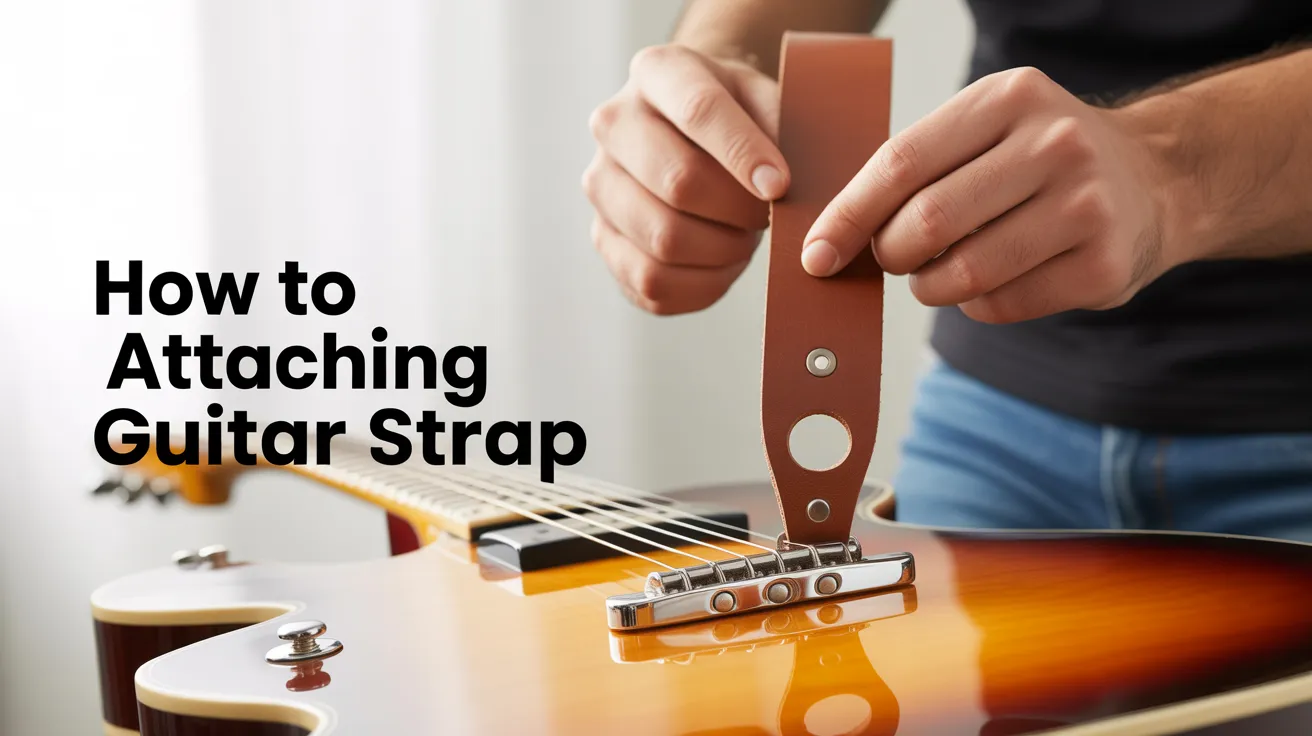
You’ve got your guitar, you’re ready to play, and you want to stand up like your favorite rock star. But there’s one problem—you’re not quite sure how to attach that guitar strap properly. Don’t worry, you’re not alone!
Learning how to attach a guitar strap is one of those essential skills that seems intimidating at first but becomes second nature once you know the trick. Whether you’ve just unboxed your first guitar or you’re switching from sitting to standing, this guide will walk you through everything you need to know. In just five minutes, you’ll have your strap securely attached and be ready to play with confidence.
Table of Contents
What You’ll Need Before You Start
The good news? You probably already have everything you need. Attaching a guitar strap doesn’t require special tools or equipment. Here’s your checklist:
- ✓ Your guitar (acoustic or electric)
- ✓ A guitar strap with leather or synthetic ends
- ✓ Strap locks (optional but highly recommended)
- ✓ A screwdriver (only if you need to tighten loose buttons)
Pro Tip: Before you begin, inspect your strap for any signs of wear and tear. A frayed or damaged strap could break during practice or performance, potentially damaging your guitar. If your strap looks worn, replace it before attaching it.
Understanding Your Guitar’s Strap Button System
Not all guitars are created equal when it comes to strap attachment. The method you’ll use depends on your guitar type and how many strap buttons it has. Let’s break down the different configurations you might encounter.
Electric Guitars: The Two-Button System
Most electric guitars make your life easy. They come with two strap buttons—one on the bottom of the body and another on the upper horn. This is the simplest and most secure attachment method, perfect if you’re just starting out.
Acoustic Guitars: One or Two Buttons
Here’s where things get a bit more interesting. Modern acoustic guitars often have two strap buttons like electrics. However, many traditional acoustics only have one button at the bottom. If that’s your situation, you’ll need to attach the other end of your strap to the headstock using a lace or string system.
Classical Guitars: No Buttons at All
Classical guitars traditionally don’t have strap buttons. If you’re playing classical, you’ll either need a special classical guitar strap that ties around the instrument or you’ll need to have buttons professionally installed.
Step-by-Step: How to Attach a Guitar Strap (Two-Button System)
Let’s start with the most common scenario—attaching a strap to a guitar with two buttons. This works for most electric guitars and many modern acoustics.
Step 1: Locate Your Strap Buttons
First, identify both strap buttons on your guitar. You’ll find one at the bottom of the body (where it meets your leg when you sit) and another on the upper horn or upper bout. Give each button a gentle wiggle to make sure they’re secure. If either feels loose, tighten it with a screwdriver before proceeding.
Step 2: Attach the Bottom End First
Hold your guitar in a comfortable position. Take one end of your strap—if there’s a difference in hole size, start with the wider end—and slide it over the bottom button. You’ll need to push firmly until the strap hole reaches the base of the button. Don’t be alarmed if the hole feels tight; that’s actually a good sign! A snug fit means your strap won’t slip off during playing.
Step 3: Secure the Top End
Now stretch your strap up to reach the top button. Slide the second hole over the upper button, making sure it sits flat against the button’s base. The strap should now be securely attached at both points.
Step 4: Adjust for Comfort
Put the guitar on and find your sweet spot. Use the adjustable slider or buckle to set the strap length. Your guitar should sit somewhere between your waist and mid-chest. Here’s a quick reference:
- Chest level: Better for intricate playing and jazz techniques
- Belly button level: Versatile for most styles, ideal for beginners
- Hip level: Rock aesthetic, but requires adjusted hand positioning
Step 5: Test Your Setup
Before you start playing, do a security check. Gently shake the guitar while wearing it. Lean forward and backward. If anything feels unstable, reattach the strap or consider investing in strap locks for added security.
How to Attach a Guitar Strap (One-Button System)
If your acoustic guitar only has one button, you’ll need a different approach for the second attachment point. Don’t worry—it’s still straightforward once you know how.
Attaching to the Bottom Button
Start the same way as before. Slide one end of your strap over the bottom button until it’s secure.
Securing to the Headstock
Most guitar straps come with a leather lace or thin string for this purpose. Thread it through the small hole at the other end of your strap. Then, loop the lace around your guitar’s headstock between the nut and the tuning pegs.
Position the lace above the strings so it doesn’t interfere with them. Tie a secure knot—a square knot or double knot works perfectly. Make sure the strap hangs at a comfortable angle, but here’s the critical part: never tie it so tight that it puts pressure on the headstock. Excessive tension could damage your guitar over time.
Alternative Solution: You can purchase commercial strap ties from brands like Fender or D’Addario. These are more secure than DIY string methods and easier to remove when you need to. They typically cost between $5 and $10 and are worth every penny if you play standing up regularly.
Common Problems and Quick Fixes
Even with the right technique, you might run into a few hiccups. Here’s how to solve the most common issues.
Strap Holes That Are Too Small
Never force a too-tight strap hole over a button—you’ll risk tearing the strap. Instead, gently stretch the hole using a leather punch or tapered object. If you have a leather strap, warm it slightly with a hairdryer first. The heat makes the leather more pliable and easier to stretch safely.
Loose Strap Buttons
If your strap button feels wobbly, grab a screwdriver and tighten it. Still loose? The screw hole might be stripped. Here’s a quick fix: use wooden toothpicks with a bit of wood glue to fill the hole. Let it dry completely, then reinstall the button with the screw. This creates new material for the screw to grip.
Strap Keeps Slipping Off
This frustrating problem usually means your strap holes are worn or stretched. Check for damage first. If the strap looks fine, clean your strap buttons—dirt and grime reduce friction. For a permanent solution, invest in strap locks. As a temporary fix, try rubber washers placed under the strap holes to increase grip.
Why Strap Locks Are Worth It
Speaking of strap locks, let’s talk about why serious players swear by them. Strap locks replace your standard strap buttons with a locking mechanism that prevents your strap from slipping off accidentally. They’re essential if you perform, move around while playing, or own a valuable instrument.
Popular options include Schaller (the industry standard), Dunlop Dual Design (affordable and versatile), and DiMarzio ClipLock (quick-release system). Installation is straightforward: remove your existing buttons, install the lock buttons with a screwdriver, attach the lock mechanisms to your strap ends, then clip everything together.
If you’re not comfortable doing this yourself, most guitar shops will install strap locks for $10 to $20 in labor. It’s a small price compared to the cost of repairing a dropped guitar.
Pro Tips for Maximum Comfort
Now that you know how to attach a guitar strap, here are some insider tips to make your playing experience even better:
Match Your Sitting and Standing Positions. Adjust your strap so the guitar sits at the same height whether you’re standing or sitting. This maintains your muscle memory and keeps your technique consistent.
Break In New Straps Gradually. Leather straps can feel stiff initially. Wear yours for short practice sessions first, gradually increasing the time. You can also condition leather with a leather softener to speed up the break-in process.
Inspect Before Every Performance. Make checking your strap part of your pre-gig ritual. Look for fraying, loose stitching, or worn holes. Catching problems early prevents disasters on stage.
Keep a Backup. Straps break at the worst possible moments. A $15 backup strap in your gig bag can save a performance and protect your guitar from damage.
Frequently Asked Questions
How do you attach a guitar strap to an acoustic guitar with one button?
Attach one end to the bottom button as normal. For the other end, use the leather lace or string that comes with your strap to tie it around the headstock between the nut and tuning pegs. Position it above the strings without putting pressure on the headstock. If you prefer, commercial strap ties offer better security, or you can have a guitar technician install a second button permanently.
Which end of the guitar strap goes where?
If your strap has different-sized holes, the wider one typically goes on the bottom button. However, many modern straps have identical ends, so it doesn’t matter. The key is ensuring both ends are secure and the strap feels comfortable at your preferred playing height.
Can you play guitar standing up without a strap?
Technically yes, but it’s not recommended. Playing without a strap means holding your guitar with your strumming arm, which restricts your movement and technique. You’ll also risk dropping your guitar. A properly attached strap gives you freedom, security, and better posture.
How tight should a guitar strap be?
Your strap should position the guitar between your waist and mid-chest when standing. The ideal height lets you maintain the same hand positioning as when sitting. Too low strains your wrist; too high feels restrictive. Adjust until you can play comfortably for extended periods.
Do I really need strap locks?
If you perform regularly, move around while playing, or own a valuable guitar, absolutely. Strap locks provide insurance against drops that could cost hundreds in repairs. Even for casual players, the peace of mind is worth the $20 to $40 investment.
You’re Ready to Stand and Play!
Congratulations! You now know exactly how to attach a guitar strap like a professional. Whether you’re using a two-button system, dealing with a single-button acoustic, or setting up strap locks for maximum security, you’ve got the knowledge to do it right.
Remember these key takeaways:
- ✓ Two-button systems are the easiest—just slide and secure both ends
- ✓ One-button acoustics need headstock attachment with lace or commercial ties
- ✓ Always test your setup before playing to ensure everything’s secure
- ✓ Strap locks are a smart investment for valuable instruments
- ✓ Regular inspections prevent accidents and extend your strap’s life
Now that your guitar is secure and comfortable, it’s time to focus on what really matters—making music. Standing up opens new doors for your playing, from better posture to performance opportunities. You’re one step closer to your goals.
Ready to take your guitar skills even further? Our comprehensive Guitar Chord Book features over 1,400 chord diagrams, finger positions, and practice progressions designed specifically for beginners who want to master the fretboard. It’s the perfect companion for your guitar journey.
Every guitarist remembers their first time playing standing up with a properly attached strap. It’s a milestone moment that makes you feel like a real musician. Now get out there, adjust that strap to your perfect height, and start creating the music you’ve always dreamed of playing!