

You pick up your guitar, ready to play your favorite song, but something feels off. The tone sounds dull, the strings feel rough under your fingers, and no matter how many times you tune, it just won’t stay in pitch. Sound familiar?
Here’s the truth: your strings are trying to tell you something. They’re tired, worn out, and desperately need replacing. But if you’ve never changed guitar strings before, the process can seem intimidating. Will you break something? Is it complicated? What if you mess up?
Don’t worry. By the time you finish reading this guide, you’ll confidently restring your guitar in under 30 minutes. Fresh strings will transform your playing experience, giving you brighter tone, better tuning stability, and smoother playability. Let’s dive in and give your guitar the refresh it deserves.
Table of Contents
Why You Need to Replace Your Guitar Strings Regularly
Before we get into the how, let’s talk about the why. Understanding when and why to change your strings will help you maintain your guitar properly and get the best sound possible.
Signs Your Strings Need Replacing
Your guitar strings are constantly working against you—literally. Every time you play, oils from your fingers, sweat, and environmental factors break down the metal. Here’s how to know when it’s time for a change:
Visual clues are often the most obvious. Look at your strings closely. Do you see rust, dark discoloration, or visible dirt buildup? Can you spot areas where the winding has come loose or unwound completely? These are clear signs your strings have reached the end of their useful life.
Sound quality tells an even bigger story. Old strings produce a dull, lifeless tone that lacks the brightness and clarity you heard when they were new. You’ll notice your sustain dies quickly, and no amount of amp tweaking can bring back that sparkle. If your guitar sounds muddy or flat no matter what you do, your strings are probably the culprit.
Feel matters too. Run your fingers along the strings. Do they feel rough, sticky, or grooved from the frets? Fresh strings should feel smooth and slippery under your fingers, making position changes and bends effortless.
As a general rule, acoustic players should change strings every three months, while electric guitarists can stretch it to every two months. But if you play daily or gig regularly, you’ll need to replace them much more frequently—sometimes weekly.
Benefits of Fresh Guitar Strings
When you install new strings, you’re not just replacing worn metal. You’re unlocking your guitar’s full potential. Fresh strings deliver crystal-clear tone with bright highs, punchy mids, and defined bass frequencies. Your chords ring out beautifully, and single notes sustain longer than you remember.
Tuning stability improves dramatically too. New strings hold their pitch reliably, so you spend more time playing and less time adjusting. This is especially important if you’re recording or performing—nobody wants to stop mid-song to retune.
The playability difference is night and day. Smooth strings make barre chords easier, string bending more responsive, and fast runs cleaner. Your fingers will thank you, especially during long practice sessions.
What You’ll Need Before You Start
Let’s gather your tools. Having everything ready before you begin makes the process smooth and stress-free.
Essential Tools and Materials
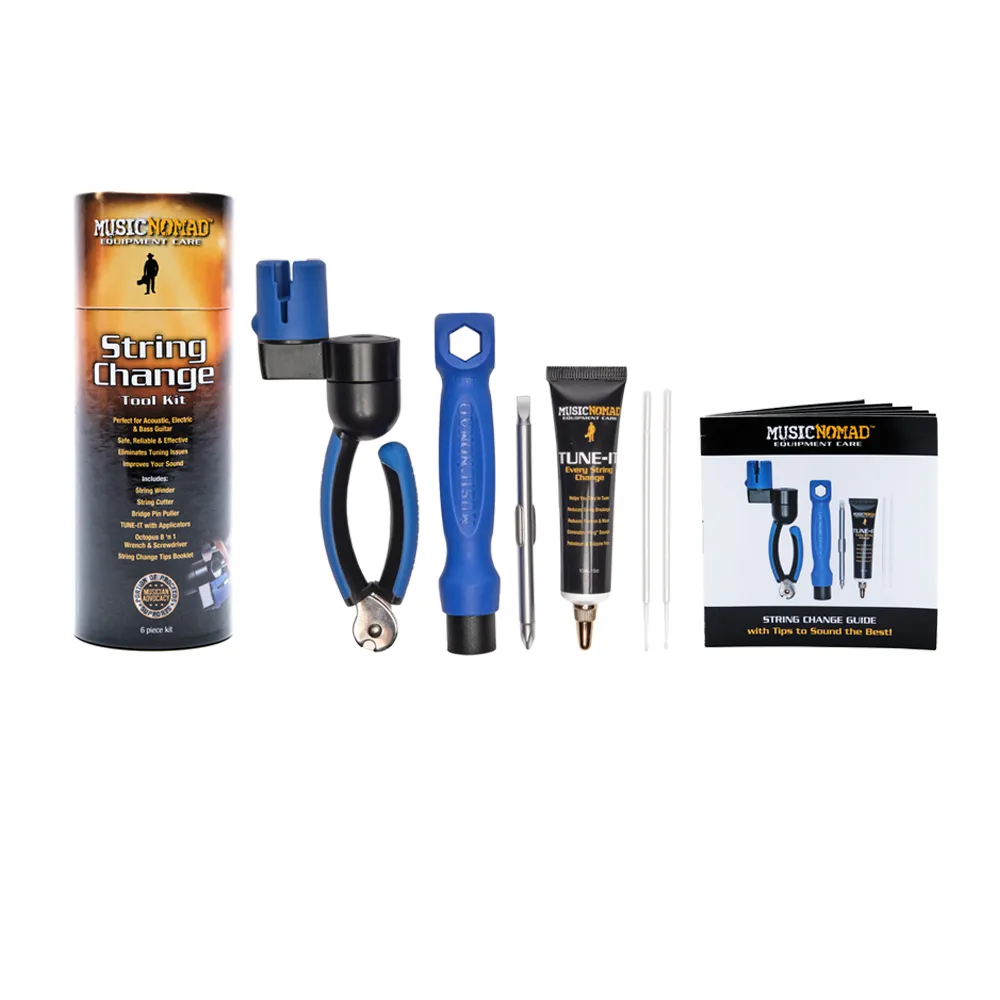
First, you’ll need new guitar strings in the right gauge for your playing style. Light gauge strings (0.010-0.046) work beautifully for beginners and lead playing. They’re easier on your fingers and bend effortlessly. Medium gauge (0.011-0.052) offers balanced tone and feel, while heavy gauge (0.012-0.054) provides fuller sound for rhythm playing and alternate tunings.
A string winder is technically optional but highly recommended. This simple tool speeds up the winding process by about 75%, saving your fingers from cramping.
You’ll also need wire cutters to trim excess string cleanly and safely. A tuner—whether clip-on, pedal, or smartphone app—ensures accurate pitch. Finally, grab a soft cloth for cleaning and optionally some fretboard conditioner or lemon oil.
Choosing the Right Strings for Your Guitar
Not all strings are created equal. Acoustic guitars use bronze or phosphor bronze strings that resonate with the wooden body. Electric guitars need nickel-wound or stainless steel strings that interact properly with magnetic pickups. Classical guitars require nylon strings—never use steel strings on a classical guitar!
Consider coated versus uncoated strings too. Coated strings from brands like Elixir last three to five times longer but cost slightly more upfront. Uncoated strings offer brighter initial tone but corrode faster. Choose based on your playing frequency and budget.
How to Replace Guitar Strings: Complete Step-by-Step Process
Now for the main event. Follow these steps carefully, and you’ll have your guitar sounding incredible in no time.
Step 1: Remove the Old Strings Safely
Start by loosening each string completely. Turn the tuning pegs counterclockwise until all tension is gone. Never cut strings while they’re under tension—they can snap dangerously or damage your guitar’s finish.
For acoustic guitars, gently remove the bridge pins using the notch built into your string winder. Pull each pin straight up while maintaining slight pressure on the string from above. This prevents the pin from sticking.
For electric guitars, simply unwind the strings from the tuning posts once they’re slack, then pull them through the bridge or tailpiece.
Here’s a pro decision you need to make: remove one string at a time to maintain neck tension, or remove all six at once for thorough cleaning. Both approaches work. Beginners often feel safer changing one string at a time, while experienced players use the all-at-once method to deep clean the fretboard.
Step 2: Clean Your Guitar (The Often-Missed Opportunity)
This is your golden opportunity! With strings off, you can access areas usually hidden. Wipe down your entire fretboard with a dry cloth to remove accumulated grime and finger oils.
For rosewood or ebony fretboards (not maple), apply a small amount of fretboard conditioner. Let it soak in for two to three minutes, then buff with a clean cloth. Your fretboard will look darker, feel smoother, and your new strings will thank you.
Take a moment to clean the guitar body and hardware too. You’ll be amazed how much better your guitar looks and plays after a thorough cleaning.
Step 3: Install the New Strings (The Right Way)
For acoustic guitars, thread each string’s ball end through the bridge hole. Insert the bridge pin firmly with the groove facing the string. Pull the string taut while pressing the pin down to lock it in place.
Thread the other end through the appropriate tuning post, leaving about three inches of slack. Bend the string 90 degrees at the post, then begin winding. Turn the tuning peg clockwise, guiding the string downward on the post. Aim for three to four neat wraps.
For electric guitars, thread each string through the bridge or tailpiece. Pull it taut to the correct tuning peg and add two to three inches past the peg. Cut the excess with wire cutters.
Insert the string through the peg hole and bend it to create a locking angle. Wind clockwise while maintaining consistent tension. Wound strings need two to three wraps, while plain strings need four to five wraps for proper grip.
Start with your low E string and work systematically across. This creates even tension distribution and helps maintain proper neck relief.
Step 4: Tune Up and Stretch Your Strings
Now comes the crucial stretching phase that most beginners skip—and then wonder why their guitar won’t stay in tune.
Tune each string to pitch using your tuner. Then gently pull each string away from the fretboard about one to two inches. Do this at several points: over the pickups or soundhole, at the middle of the fretboard, and near the nut.
You’ll immediately hear the pitch drop. That’s normal and expected. Retune and repeat this stretch-and-tune cycle three to four times until the strings hold their pitch reliably.
This process stabilizes the strings by working out microscopic stretching that would otherwise happen gradually over days. Spend five extra minutes here, and you’ll save hours of frustration later.
Step 5: Trim Excess String and Final Adjustments
Use your wire cutters to trim strings about a quarter inch past each tuning post. Bend these trimmed ends downward toward the headstock. This prevents painful finger stabs and looks cleaner too.
Check your intonation by playing the 12th fret harmonic against the fretted note. They should match perfectly. Make any final tuning adjustments, and you’re done!
Common Mistakes to Avoid When Replacing Guitar Strings
Even experienced players sometimes make these errors. Learn from others’ mistakes:
Never cut strings under tension. This can cause bridge pins to fly out dangerously or damage your tuning machines. Always loosen completely first.
Don’t install too many or too few winds on your tuning posts. Too many causes tuning instability and string overlap. Too few lets strings slip. Follow the recommended wrap counts.
Never skip the stretching process. Yes, it adds a few minutes. But unstretched strings will plague you with constant retuning for days. Do it right the first time.
Avoid forgetting about fretboard cleaning. This is your best opportunity to maintain your instrument properly. Don’t waste it.
How Often Should You Replace Guitar Strings?
The honest answer? It depends on your playing habits.
Casual players who practice one to two hours weekly can change strings every three to four months. Regular players logging three to five hours weekly should aim for every one to two months. If you play an hour daily, change strings every three to four weeks.
Professional guitarists often change strings weekly or even before every recording session and performance. Studio work demands absolute tonal perfection, which only fresh strings can deliver.
Several factors affect string lifespan beyond playing time. Hand chemistry matters enormously—some people have naturally acidic sweat that corrodes strings faster. Humidity and climate play roles too. Coastal areas accelerate corrosion. Your playing style affects wear patterns. Aggressive bending and heavy picking break strings down faster than gentle fingerpicking.
Here’s a game-changing tip: wash your hands before playing and wipe your strings after each session. This simple habit can double your string life.
Pro Tips for Making Your Strings Last Longer
Want to maximize your string investment? Follow these proven strategies:
Keep a soft cloth by your guitar stand and wipe down strings after every playing session. This removes corrosive oils before they can damage the metal. Use commercial string cleaner products for even better results—they add weeks to string life.
Store your guitar in its case or a controlled environment when not playing. Exposure to humidity extremes accelerates oxidation and corrosion. Aim for 45 to 55 percent relative humidity.
Consider investing in coated strings. While they cost more initially, brands like Elixir and D’Addario EXP last three to five times longer than uncoated strings. Over time, they’re actually more economical.
Frequently Asked Questions
How often should I replace my guitar strings?
For casual players, every three to four months works well. Daily players should change strings every three to four weeks. Professional guitarists often change strings weekly or before performances for optimal tone and tuning stability. The key is watching for visual and tonal signs of wear rather than following a rigid schedule.
Can I replace guitar strings one at a time or all at once?
Both methods work perfectly! Replacing one string at a time maintains consistent neck tension and feels safer for beginners. Removing all strings at once allows thorough fretboard cleaning but requires understanding proper guitar setup. Choose the method that matches your confidence level.
What happens if I don’t know how to replace guitar strings properly?
Improper string replacement can lead to frustrating tuning instability, unexpected string breakage, or even bridge damage. Following a step-by-step guide like this one ensures you develop proper technique that protects your instrument and delivers professional results.
Should I use the same gauge when I replace guitar strings?
Generally yes—stick with the gauge your guitar is currently set up for. Changing gauges significantly, like jumping from .010s to .012s, may require truss rod adjustment, bridge height changes, and intonation correction. If you want to permanently switch gauges, consult a qualified guitar technician for proper setup.
How long does it take to replace guitar strings as a beginner?
Your first attempt might take 45 to 60 minutes as you work through each step carefully. That’s completely normal and expected. With practice, most guitarists can restring their guitar in 15 to 20 minutes. Using a string winder and following a systematic approach speeds up the process considerably.
Your Guitar Will Thank You
Congratulations! You’ve just learned an essential guitar maintenance skill that will serve you for your entire musical journey. Fresh strings mean renewed inspiration, better practice sessions, and the professional tone you’ve been chasing.
Remember, every guitar legend started exactly where you are now. String changing seemed intimidating at first, but with practice, it becomes second nature—just like learning your first chord.
Now that your guitar sounds incredible with fresh strings, it’s time to put them to work. Grab your beautifully restrung guitar and play your favorite song. Feel the difference. Hear the clarity. Enjoy the smooth playability.
Ready to take your playing to the next level? Download our Complete Guitar Chord Book and master 150+ essential chord shapes organized by difficulty. It’s the perfect companion for beginners ready to transform their skills. Your freshly strung guitar deserves great music—let’s make it happen together.
Keep playing, keep learning, and most importantly, keep enjoying the journey. Your guitar is ready when you are!